MSP marketing: how IT companies win clients from search
Managed service providers sell to business owners who usually start looking after something breaks: a security scare, a failed backup, an IT person who left. Those searches are expensive to buy and valuable to win. Here's what buyers search for, what it costs to advertise on those terms and how to build the pages that bring the call to you.

By Nouman Sabir, AI search & SEO specialist
Updated · 4 min read

The short answer
- IT buyers search by need and place: "managed IT services", "IT support near me", "IT services for small business", plus security and cabling terms.
- Those clicks are expensive. "IT services for small business" averaged about $94 a click and "managed IT services" about $65 in October 2026, so organic rankings carry real value.
- Win with a Business Profile for each office, a page per service and per industry, local pages for the areas you cover and plain-English answers about cost and response times.
- Referrals still matter, but buyers check you online before calling. Reviews, case studies and clear pricing ranges close that gap.
What IT buyers search for, and what it costs
- IT services for small business$94
- Managed IT services$65
- Managed service provider$64
- Cybersecurity services$53
- IT support near me$42
- Security camera installation$21
- Structured cabling$19
Average cost per click from Google Ads keyword data for national searches, pulled through DataForSEO in October 2026.
Volumes are healthy for a B2B niche: about 22,200 monthly searches for "managed IT services", 18,100 for "managed service provider" and 9,900 for "IT support near me". Interest in "MSP marketing" itself is about 590 searches a month, with very low competition, which tells you most providers still rely on referrals.
Pages that win MSP contracts
- One page per service: managed IT, help desk, cybersecurity, backup and disaster recovery, Microsoft 365, cloud migration, cabling and VoIP. Say what's included and what isn't.
- Industry pages: law firms, medical practices, manufacturers, nonprofits. Name the compliance requirements and software they use.
- Pricing page: per-user or per-device ranges and what changes the price. Buyers search for this, and a range builds trust faster than "contact us".
- Location pages for each metro you support on-site, with response times and real clients nearby.
- Answer-first guides: how much managed IT costs, in-house vs outsourced IT, what to do after a ransomware attack, how to switch MSPs.
Link each guide to the service it supports and each industry page to the services that industry buys. My B2B SEO strategy guide explains the structure in more detail.
Local SEO for IT companies
"IT support near me" is a Maps search. For each staffed office:
- A verified Google Business Profile with the most specific primary category that fits, such as Computer support and services or Computer consultant, plus secondary categories for real services. See choosing categories.
- If clients never visit your office, hide the address and set service areas instead.
- Every service listed with a short description, and photos of the team and real installs
- A review request after each resolved project or onboarding; these scripts work for B2B too
- The same name, address and phone across directories and partner listings; see local citations
What this looks like in practice
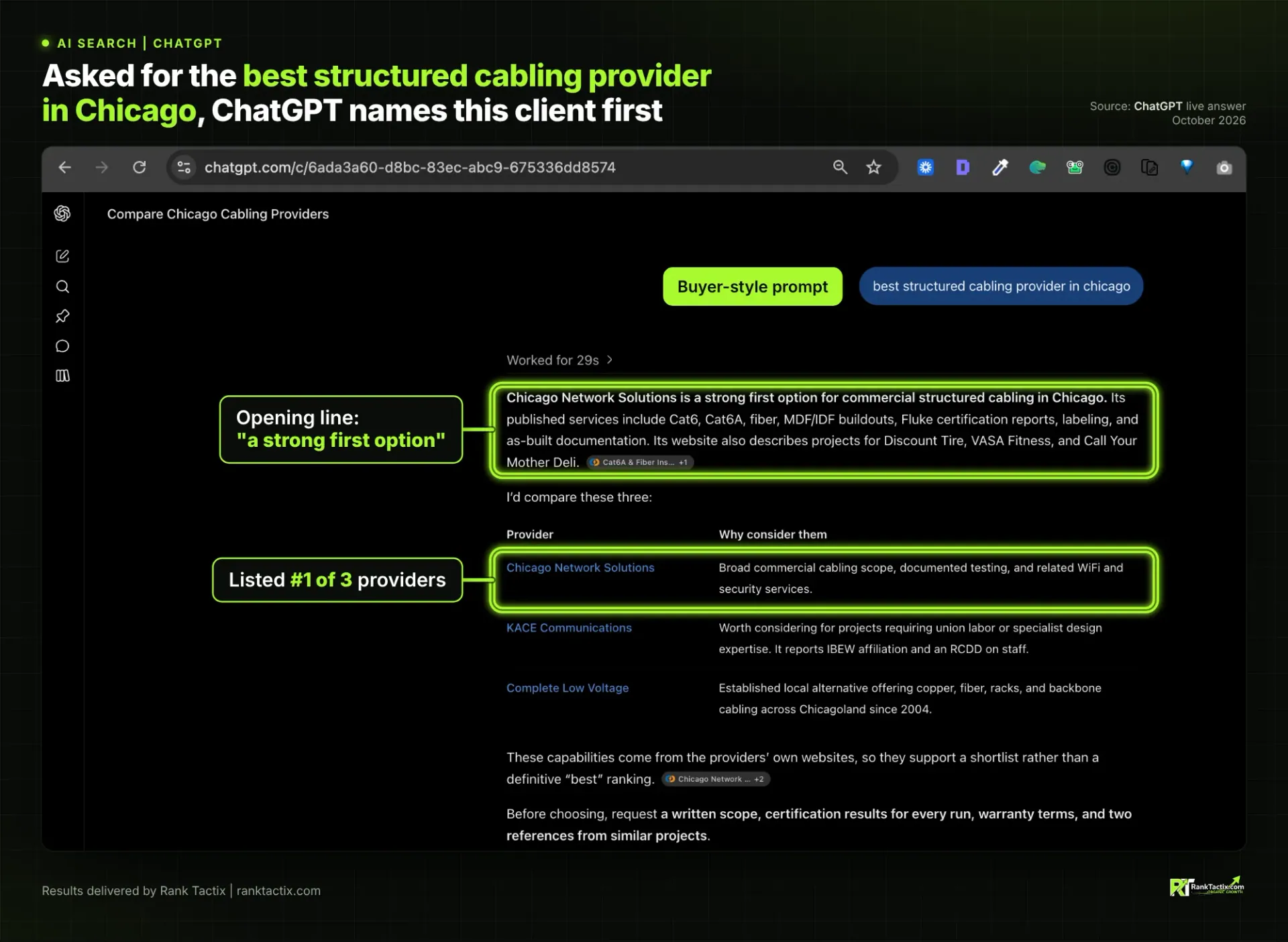
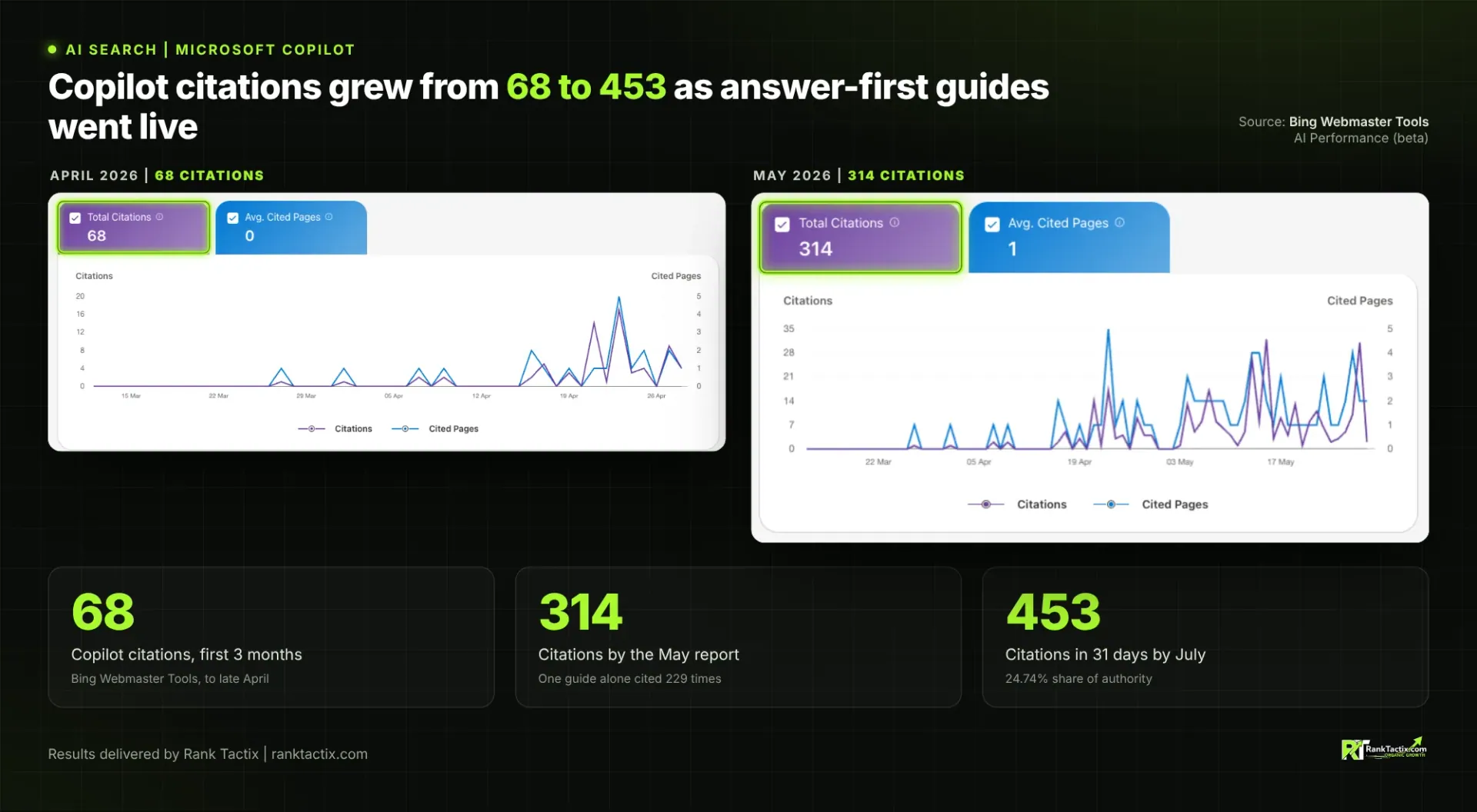
Chicago Network Solutions, a B2B network and security contractor, followed this approach with 22 service, 28 location, 25 industry and 13 guide pages, a rebuilt Business Profile and 43 consistent citations. In six months Google impressions grew from 13.6K to 138K and inquiries from zero to 14 a month, and ChatGPT now names them first for structured cabling in Chicago. The case study has the details.
Beyond search
- Referral partners: accountants, lawyers, office furniture and phone system vendors who meet businesses at the same moments you do
- Vendor directories: partner listings from the software and hardware vendors you're certified with
- Events and associations: chamber of commerce and industry groups, which also earn local links
- Email and LinkedIn: short, useful notes on security issues your clients face, linking back to your guides
Frequently asked questions
What is MSP marketing?
Marketing for managed service providers: getting business owners who need IT support, security or infrastructure work to find, trust and contact you.
What is the best way for an MSP to get clients?
Referrals plus search. Ranking for managed IT, IT support and security searches in your area brings buyers at the moment they need help, and clicks for those searches are expensive to buy.
Should an MSP publish pricing?
Publishing ranges, such as per-user or per-device, and what changes them helps buyers and qualifies leads. You don't need exact quotes.
Do MSPs need a Google Business Profile?
Yes, for each staffed location. Many IT searches show a Maps pack, and reviews there are often the first thing a buyer checks.
How long does SEO take for an MSP?
Usually three to six months for meaningful movement, depending on competition in your metro and how much your site already has.
Sources
- Tips to improve your local ranking on Google, Google Business Profile Help
- Manage your service areas for service-area and hybrid businesses, Google Business Profile Help
- Google Ads keyword data (search volume and cost per click), DataForSEO, pulled October 2026
Written by Nouman Sabir
Nouman Sabir is an AI search and local SEO specialist with 5+ years of hands-on work across 100+ websites, from contractors and law firms to SaaS and Shopify stores. He is Top Rated on Upwork with a 100% Job Success Score and 44 client reviews. Everything here comes from client work he has done or data he pulled himself.