
B2B SEO strategy: how to turn search into sales conversations
B2B search volume is small, but each search can be worth a contract. The strategy is different from consumer SEO: fewer keywords, more decision makers, longer sales cycles and buyers who increasingly ask AI assistants for a shortlist. Here's the approach that took a B2B contractor from 13,600 to 138,000 impressions in six months.

By Nouman Sabir, AI search & SEO specialist
Updated · 4 min read

The short answer
- B2B SEO wins on a short list of high-value searches: what you do, who you do it for and where. Volume matters less than intent.
- Build pages for each service, each industry you serve and each region, with real specifics: scope, pricing ranges, timelines and proof.
- Answer the questions buyers ask before they contact anyone. Those pages also get cited by ChatGPT and Google's AI features.
- Measure pipeline, not traffic: inquiries, qualified calls and deals that started with organic search.
What's different about B2B SEO
| Consumer / local | B2B | |
|---|---|---|
| Search volume | Often thousands per keyword | Often tens or hundreds |
| Value of one lead | Hundreds of dollars | Thousands to six figures |
| Who searches | The buyer | Researchers, managers and the final approver |
| Sales cycle | Same day to a few weeks | Weeks to months |
| What wins | Maps, reviews, fast contact | Specific service pages, proof, answers to technical questions |
Clicks are priced accordingly. In October 2026, a Google Ads click for "b2b seo agency" averaged about $129 nationally, with roughly 1,000 searches a month (DataForSEO). Small volumes, high stakes.
The page structure that works
- Service pages: one per service you sell, with scope, typical timelines, what affects cost and examples of past projects.
- Industry pages: one per industry you serve, explaining the problems you solve for that type of company and naming the standards or systems involved.
- Location pages: for regions you actively serve, with real projects there, not a city name swapped into a template.
- Answer-first guides: the questions buyers ask early, like cost, timelines, comparisons and requirements, answered in the first paragraph.
- Proof: case studies with numbers, client logos you're allowed to use, certifications.
Link these together: every guide points to the service it relates to, every industry page links to the services that industry buys, and every service page links to a case study. Internal links tell Google which page matters for which search and carry readers toward the contact form.
Case study: a B2B contractor from page four to ChatGPT's first pick
Chicago Network Solutions installs structured cabling, security systems and business networks. When we started in March 2026 the site earned 17 clicks a month and almost no inquiries. The work:
- 88 SEO pages: 22 service, 28 location, 25 industry and 13 answer-first guides
- Custom LocalBusiness, Organization and Website schema
- Google Business Profile rebuilt, weekly posts and 43 consistent citations
- Content written to be cited: direct answers, real prices and technical specifics
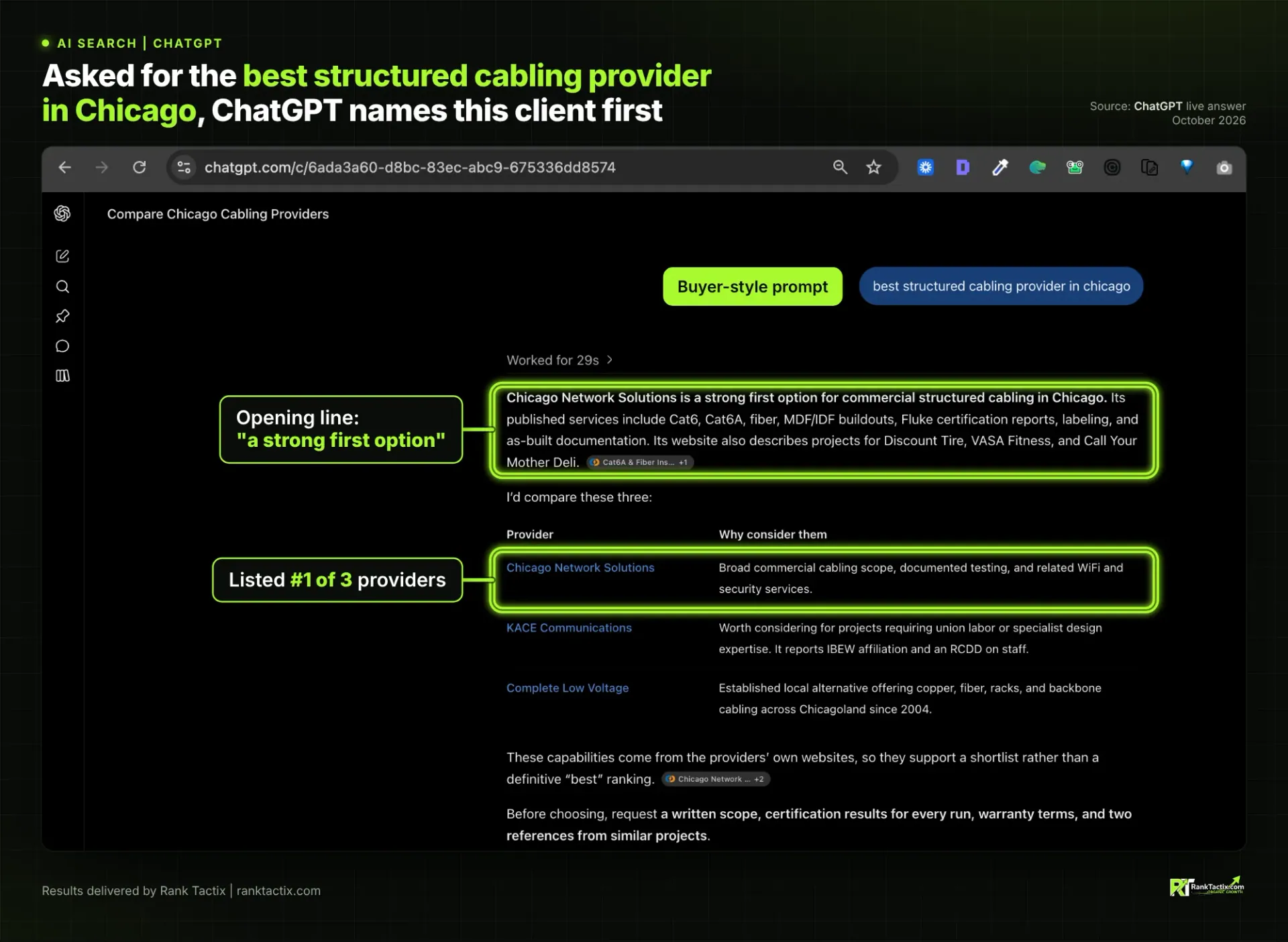
The full breakdown is in the case study. The lesson for B2B: depth and specifics on a focused set of pages beat a large blog with thin posts.
Plan for AI search from the start
B2B buyers use ChatGPT, Copilot and Google's AI Overviews to build vendor shortlists. Google says there are no special requirements to appear in its AI features beyond normal SEO, which means the same clear, specific pages do double duty. What helps:
- A direct answer at the top of each page, with numbers where you have them
- Consistent company details across your site, schema, Business Profile and directories
- Pages that name the industries, systems and standards you work with
- Mentions on industry sites, associations and partner directories
My guides on getting recommended by ChatGPT and GEO vs SEO go deeper.
Measure what sales cares about
- Inquiries and calls from organic search, tracked as conversions in Analytics
- Which landing pages started those inquiries
- Qualified opportunities and closed deals, matched in your CRM
- Impressions and clicks for your money searches in Search Console
- Mentions in AI answers for the questions your buyers ask
For SaaS companies with self-serve signups the funnel is different; see the SaaS SEO strategy guide.
Frequently asked questions
What is a B2B SEO strategy?
A plan to rank for the searches business buyers make before choosing a vendor, usually built around service, industry and location pages, answer-first content and proof, measured by inquiries and deals.
Does SEO work for B2B companies with low search volume?
Yes. A handful of searches a month can be worth more than thousands in consumer markets because each lead is worth so much more. The key is targeting searches with buying intent.
How long does B2B SEO take?
Usually three to six months for meaningful movement and longer in competitive niches. The case study above went from 13.6K to 138K impressions over six months.
Should B2B companies blog?
Only with posts that answer real buyer questions and link to the relevant service. Generic thought leadership rarely ranks or converts.
How do B2B companies get recommended by ChatGPT?
By having specific, consistent information about what they do, who for and where, on their own site and on trusted third-party sites, because AI assistants draw on what they can find and verify.
Sources
- AI features and your website, Google Search Central
- Creating helpful, reliable, people-first content, Google Search Central
- Google Ads keyword data (search volume and cost per click), DataForSEO, pulled October 2026
Written by Nouman Sabir
Nouman Sabir is an AI search and local SEO specialist with 5+ years of hands-on work across 100+ websites, from contractors and law firms to SaaS and Shopify stores. He is Top Rated on Upwork with a 100% Job Success Score and 44 client reviews. Everything here comes from client work he has done or data he pulled himself.