
Local citations and business directories: which ones matter and how to fix them
A citation is any mention of your business name, address and phone number on another site: directories, review sites, social profiles, associations and news. Google's own help page says it uses information about your business from across the web, including directories, to judge prominence. Here's which citations are worth your time and how to keep them consistent.

By Nouman Sabir, AI search & SEO specialist
Updated · 5 min read

The short answer
- Citations are mentions of your name, address and phone (NAP) on other sites. Google lists directories among the sources it uses to judge a business's prominence.
- Consistency matters more than volume: the same name, address, phone and website everywhere.
- Start with the platforms customers and AI assistants actually use, then your industry's directories, then local organizations.
- Fix old addresses and phone numbers first. Conflicting details make it harder for Google and AI tools to trust which information is right.
What a citation is, and why it still matters
Google's local ranking help page describes prominence as how well known a business is, based on information Google has from across the web, such as links, articles and directories. Citations don't move rankings on their own the way reviews and categories can, but inconsistent ones create doubt about which phone number or address is real.
They matter for AI search too. When someone asks ChatGPT or Google's AI Mode for a recommendation, the answer often draws on directories and review sites. For a cabling contractor in Chicago, making the business description consistent across 43 citations was part of the work that led to ChatGPT naming it first.
NAP consistency: the rule that matters most
Pick one exact format and use it everywhere: your Business Profile, website footer, schema markup and every listing.
| Detail | Inconsistent | Consistent |
|---|---|---|
| Name | Smith Plumbing LLC / Smith Plumbing & Drains | Smith Plumbing (exactly as on signage) |
| Address | Ste 4 / Suite #4 / no suite number | 1200 Main St, Suite 4 |
| Phone | Old number on Yelp, tracking number on Facebook | One main local number everywhere |
| Website | http:// vs https://, with and without www | The final https:// URL |
Which directories to prioritize
1. The core platforms
- Google Business Profile
- Apple Business Connect (Apple Maps and Siri)
- Bing Places for Business (Bing, and the index several AI tools use)
- Yelp, Facebook, Better Business Bureau and Nextdoor
2. Your industry's directories
- Home services: Angi, HomeAdvisor, Houzz, Thumbtack, and manufacturer dealer locators for brands you're certified with
- Law firms: Avvo, Justia, FindLaw, Martindale-Hubbell, and your state bar's directory
- B2B and contractors: trade associations, supplier "find an installer" pages, chambers of commerce
3. Local and data sources
- Your chamber of commerce, local business associations and city or county directories
- Data aggregators such as Data Axle and Foursquare, which feed business details to many smaller sites, apps and navigation systems
For the free listings to claim first, including Bing Places and Apple Business Connect, see free business listing sites worth claiming. Once those are consistent, local link building does more than adding more directories.
Make your own website the source of truth
Directories copy details from each other and from data aggregators, so mistakes spread. The most reliable fix is to make your own site clear and consistent, then point every listing to it.
- Put the exact name, address and phone in the footer of every page, as text rather than an image
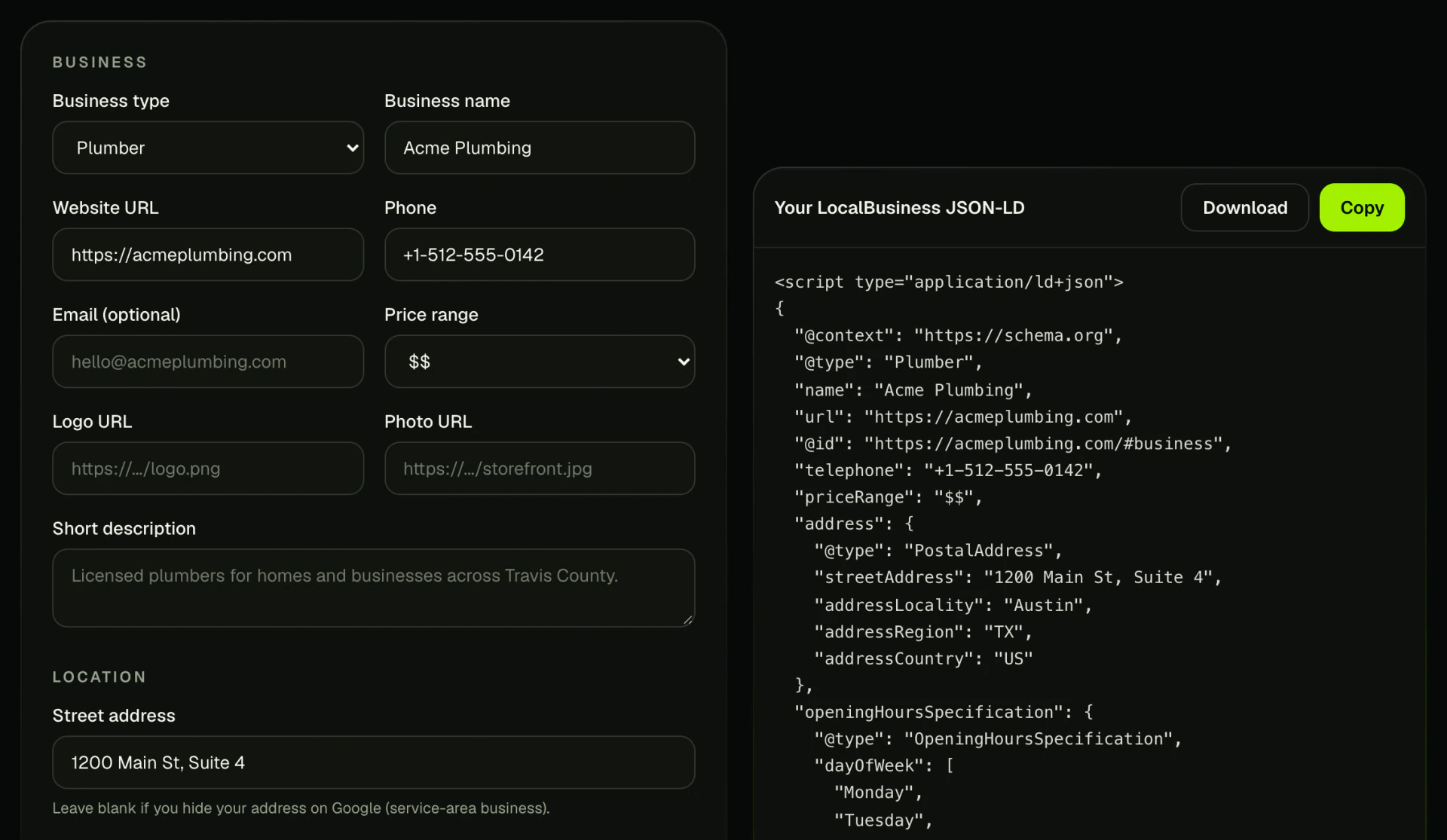
- Add LocalBusiness or Organization schema with the same details, plus your logo and links to your main profiles
- Create a contact page with the address, a map, hours and the service area
- For several locations, give each its own page with its own details and schema
When AI assistants and search engines find the same details on your site, your Business Profile and the main directories, they have little reason to doubt which information is right.
How to clean up old or wrong listings
- 1Search your business name, old phone numbers and old addresses on Google to find listings you forgot about.
- 2Claim each listing and correct the name, address, phone and website. Most directories let owners claim a listing for free.
- 3Ask directories to remove duplicates rather than leaving two versions live.
- 4Update the data aggregators so corrections flow down to smaller sites.
- 5Keep a simple spreadsheet of every listing with the login and the date you last checked it.
Frequently asked questions
What are local citations?
Online mentions of your business name, address and phone number on sites other than your own, such as directories, review sites, social profiles and local news.
Do citations still help local SEO?
Google lists directories among the information it uses to judge prominence. Accurate citations support rankings and trust, but reviews, categories and your website usually matter more.
How many citations do I need?
Enough to cover the platforms your customers and AI tools use, plus your industry's key directories. For most local businesses that's a few dozen accurate listings.
What is NAP consistency?
Using exactly the same business name, address and phone number everywhere your business is listed.
Should I use a tracking phone number on listings?
Keep your main local number as the primary number. If you use call tracking, set it up so the main number stays consistent across directories.
Sources
- Tips to improve your local ranking on Google, Google Business Profile Help
- Local business (LocalBusiness) structured data, Google Search Central
- Guidelines for representing your business on Google, Google Business Profile Help
Written by Nouman Sabir
Nouman Sabir is an AI search and local SEO specialist with 5+ years of hands-on work across 100+ websites, from contractors and law firms to SaaS and Shopify stores. He is Top Rated on Upwork with a 100% Job Success Score and 44 client reviews. Everything here comes from client work he has done or data he pulled himself.