
Online reputation management for small businesses
For a local business, online reputation mostly means reviews: how many, how recent, how good, and how you answer them. Managing it well is a routine, not a cleanup job. It also has legal edges now: the FTC's rule on fake reviews has applied since October 2024. Here's a plan that builds your reputation without crossing them.

By Nouman Sabir, AI search & SEO specialist
Updated · 4 min read

The short answer
- Reputation management for a local business is four habits: ask every customer for a review, answer every review, report the ones that break the rules, and fix what reviews keep pointing to.
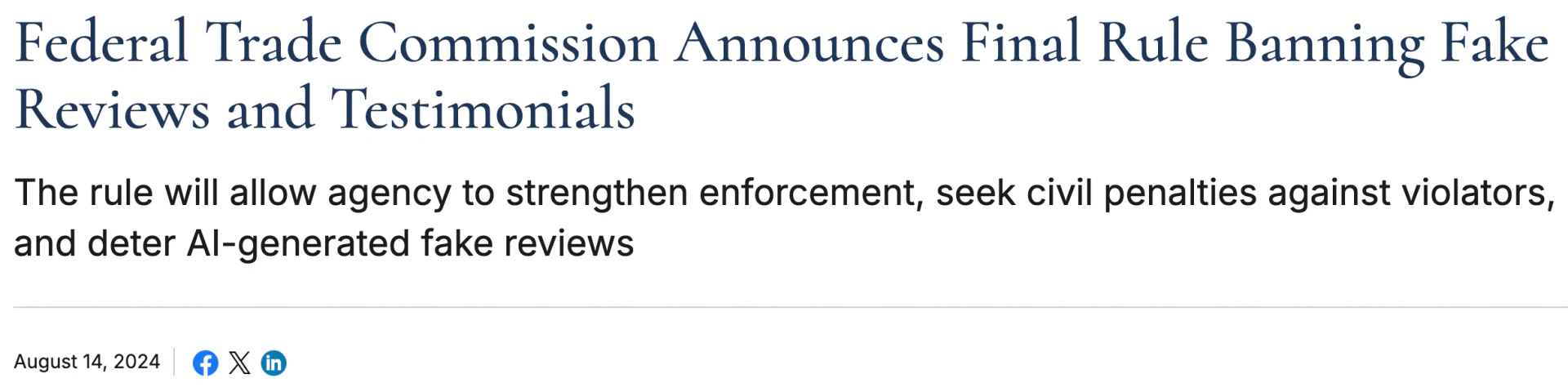
- The FTC's rule banning fake reviews took effect on October 21, 2024. It covers writing, buying or selling fake reviews, sentiment-conditioned incentives, undisclosed insider reviews and review suppression.
- You can't pay to remove reviews from Google. You can report reviews that break Google's policies, and reply publicly to the rest.
- Search interest is high and so are ad prices: "online reputation management" gets about 4,400 searches a month with a cost per click near $101.
The routine that builds a reputation
| How often | What to do | Guide |
|---|---|---|
| After every job | Send a direct review link to every customer, not only happy ones | Getting more reviews |
| Daily or weekly | Reply to every new review, good and bad | Responding to reviews |
| When it happens | Report reviews that break Google's policies | Removing a review |
| Monthly | Read recent reviews for patterns: late arrivals, pricing surprises, rude staff | Fix the cause |
| Quarterly | Check Yelp, Facebook, Bing and industry sites, not just Google | Free listing sites |
The rules: the FTC's fake review ban
- Fake reviews: writing, buying, selling or spreading reviews you know or should know are fake, including AI-written ones
- Conditional incentives: paying or rewarding customers for reviews that must be positive (or negative about a competitor)
- Insider reviews: reviews by employees or relatives without disclosing the connection
- Review suppression: using threats, intimidation or unfounded legal claims to get reviews removed
- Fake review sites: company-controlled sites posing as independent reviewers
The FTC's own Q&A adds two practical points. Asking customers in general to leave reviews is fine. Asking only happy customers isn't specifically banned by the rule, but the FTC says it could violate the FTC Act. In December 2025 the FTC sent warning letters to ten companies, noting penalties of up to $53,088 per violation.
Handling negative and fake reviews
- 1Pause before replying. Answer within a day or two, calmly and briefly.
- 2Reply to the reader, not the reviewer. Future customers judge you by the reply. Acknowledge, explain the fix, offer to talk offline.
- 3Never reveal private details, such as job specifics, health or legal information.
- 4Report reviews that break policy: fake, off-topic, conflicts of interest, hateful or personal information. Google decides.
- 5Don't pay anyone who promises removal. Nobody can remove legitimate reviews for a fee, and offers to remove reviews in exchange for payment are a known extortion scam.
Inviting an unhappy customer to update their review after you've fixed the problem is allowed; the FTC says the rule doesn't prohibit asking satisfied customers to update their reviews. Paying them to remove a truthful negative review may be an unfair practice.
Beyond reviews
- Search your business name monthly and note what shows on page one
- Keep your Business Profile complete, with current photos and posts
- Claim your listings on Bing, Apple, Yelp and the directories in your trade
- Ask AI assistants about your business; they summarize what reviews and listings say. See getting recommended by ChatGPT.
Frequently asked questions
What is online reputation management?
Shaping what people find about your business online. For local businesses it's mostly earning and answering reviews, keeping listings accurate and dealing with policy-breaking reviews.
Can I pay to remove bad reviews?
No legitimate service can remove truthful reviews from Google. You can report reviews that break Google's policies; Google decides whether they come down.
Is it legal to offer customers a discount for a review?
Under the FTC rule, an incentive can't be conditioned on the review being positive. Google's own policies are stricter about incentivized reviews, so check them before offering anything.
Should I reply to every review?
Yes. Replies show future customers that you listen, and a calm reply to a bad review often does more than the review itself.
How long does it take to improve my online reputation?
A steady routine usually changes your average and review count within a few months. Old reviews don't disappear, but new ones push them down.
Sources
- Federal Trade Commission Announces Final Rule Banning Fake Reviews and Testimonials, Federal Trade Commission
- The Consumer Reviews and Testimonials Rule: Questions and Answers, Federal Trade Commission
- FTC Warns 10 Companies About Possible Violations of the Agency's New Consumer Review Rule, Federal Trade Commission
- Add, edit, or delete Google Maps reviews and ratings, Google Maps Help
Written by Nouman Sabir
Nouman Sabir is an AI search and local SEO specialist with 5+ years of hands-on work across 100+ websites, from contractors and law firms to SaaS and Shopify stores. He is Top Rated on Upwork with a 100% Job Success Score and 44 client reviews. Everything here comes from client work he has done or data he pulled himself.