
How to rank higher on Google Maps: what actually moves the needle
Google uses three factors for local rankings and says so publicly. You can't change distance, so the work is on the other two. These are the fixes I make for local clients, in the order that usually pays off fastest.

By Nouman Sabir, AI search & SEO specialist
Updated · 6 min read

The short answer
- Google ranks local results on relevance, distance and prominence. Distance is fixed; relevance and prominence are where the work goes.
- The biggest relevance lever is your primary category. The biggest prominence levers are reviews and a website that ranks for your services.
- Consistent name, address and phone across the web and a separate page for each service and area help Google trust and understand you.
- Expect profile fixes to show within weeks and prominence work to build over three to six months.
How Google ranks businesses on Maps
Google's help page on local ranking names three factors:
- Relevance: how well your profile matches what someone searched. Categories, services, description and your website all feed this.
- Distance: how far you are from the searcher, or from the location in their search. You can't change it, but it's why rankings look different across your city.
- Prominence: how well known you are. Google says this includes information from across the web, such as links, articles and directories, plus your review count and score and your position in web results.
Google also says there's no way to pay for a better local ranking. Local Services Ads and Maps ads appear in separate, labeled ad slots; they don't lift your organic map position. My guide to Local Services Ads explains how those work.
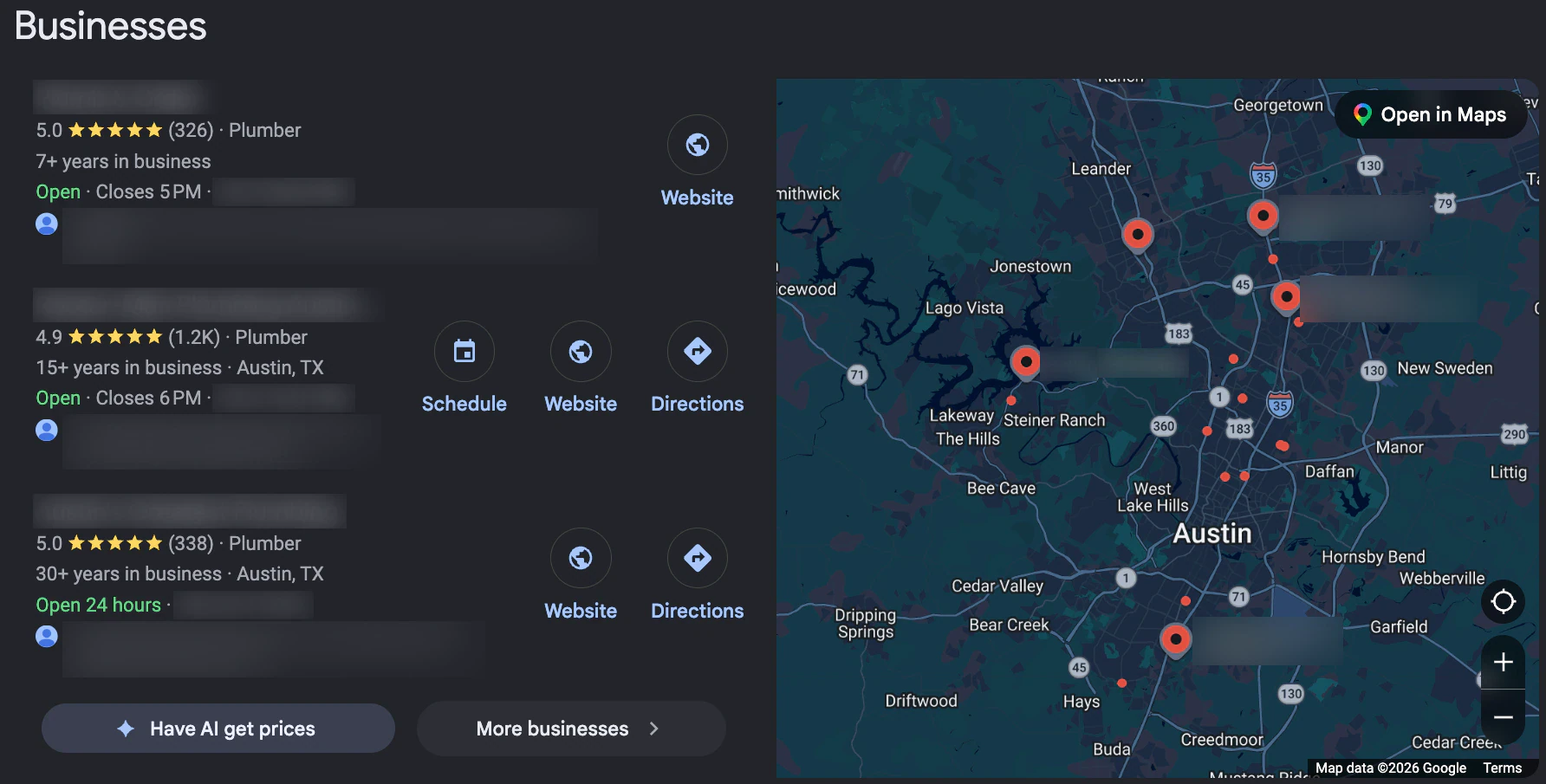
Fixes for relevance
1. Choose the most specific primary category
If you mainly do roof replacements, "Roofing contractor" beats "General contractor". If you're a criminal defense firm, "Criminal justice attorney" beats "Lawyer". Look at the primary category of the top three businesses for your main search; you can see it under their name on Maps. My category guide walks through it. Then add secondary categories for real services you offer, and no others.
2. Fill in services and products
Add every service you want to be found for, each with a short description in customer language. A plumber should list water heater replacement, drain cleaning, leak detection and so on, not just "Plumbing".
3. Build a page on your website for each service
Your profile's website link tells Google more about you. One "Services" page listing everything gives it little to work with. A dedicated page for each main service, with prices, process and photos of real jobs, makes you relevant for each of those searches, and it ranks in organic results too.
4. Add local business schema
Structured data on your homepage and location pages states your name, address, phone, hours and service area in a format search engines read reliably. My free local business schema generator writes the code for you.
Fixes for prominence
5. Grow reviews steadily
Google says more reviews and positive ratings can improve your local ranking. What works is asking every customer, every time, with a one-tap link. My guide on getting more Google reviews has the templates.
6. Make your name, address and phone consistent
Directories, social profiles, industry associations and data aggregators should list your business exactly as your profile does. Conflicting addresses or old phone numbers make Google less sure which details are right. Fix the big directories first, then industry-specific ones. The citations guide lists which ones matter.
7. Earn local links and mentions
Links from local news, chambers of commerce, sponsorships, suppliers and trade associations are the kind of prominence Google describes. One link from your city's business journal is worth more than fifty from random directories.
8. Rank your website organically
Google's help page lists your position in web results as part of prominence. In practice, the businesses that dominate the map pack usually also rank on page one for the same searches, because the same signals drive both.
9. Keep the profile active
Add photos of real jobs, update hours for holidays, answer questions and reply to reviews. Google's local ranking page recommends keeping hours accurate and adding photos. An active profile also converts better when people find it.
Links from local sites feed prominence too. Local link building lists the sources that work and the ones Google treats as spam. To track all of this without paying for software, see the free local SEO tools guide.
Ranking in towns beyond your address
Because distance is a ranking factor, a business based in one town will struggle to show in the map pack for searches made 25 miles away. Service areas on your profile don't change that much. What does work:
- A genuinely useful page for each town you serve, with local jobs, reviews from customers there and details that only apply there (permits, travel time, common problems in older homes)
- Real work and reviews from those areas
- A second staffed location with its own profile, if you truly operate there
Location pages bring organic traffic even where the map pack is out of reach. For a truck and ECU repair business, mapping more than 120 pages to brands, services and cities took search clicks from 2 to 4 a day to 40 to 50 a day.

How to measure your Maps rankings
Your own searches are personalized and tied to where you're standing. To see real progress, track a handful of main searches from several points across your service area each month, and watch the numbers that matter more than position: calls, direction requests and website clicks in your Business Profile performance report, plus form fills and calls in Google Analytics.
Tag your profile's website link with UTM parameters so its visits show up separately in Google Analytics. The free UTM builder has a Business Profile preset.
Want every step in order? The local SEO checklist lists 40 of them, each linked to a guide.
Frequently asked questions
What is the most important Google Maps ranking factor?
Distance from the searcher has the biggest effect, but you can't change it. Of the factors you control, your primary category and your reviews usually make the biggest difference.
How long does it take to rank higher on Google Maps?
Category and profile fixes can move rankings within a few weeks. Reviews, links and website pages build over three to six months, faster in small towns and slower in big, competitive cities.
Do Google Business Profile posts help rankings?
Google doesn't list posts as a ranking factor. They help people who find your profile see that you're active and what you offer, which can lift calls.
Does keyword stuffing my business name help?
It can work briefly, but it breaks Google's guidelines and gets profiles suspended when competitors report it. Use your real business name.
Can I pay Google to rank higher on Maps?
No. Ads appear in labeled ad positions above or within the map results, but Google says payment doesn't affect organic local rankings.
Is a 4.2 Google rating good?
It's solid, but in competitive trades the businesses in the map pack often sit at 4.6 or higher. Compare yourself with the top three for your main search, and focus on steady new reviews rather than the decimal.
Does the business name help rankings?
Words in your legal business name can help relevance, which is exactly why adding keywords that aren't part of your real name is against Google's guidelines.
Sources
- Tips to improve your local ranking on Google, Google Business Profile Help
- Guidelines for representing your business on Google, Google Business Profile Help
- Local business (LocalBusiness) structured data, Google Search Central
- SEO Starter Guide, Google Search Central
Written by Nouman Sabir
Nouman Sabir is an AI search and local SEO specialist with 5+ years of hands-on work across 100+ websites, from contractors and law firms to SaaS and Shopify stores. He is Top Rated on Upwork with a 100% Job Success Score and 44 client reviews. Everything here comes from client work he has done or data he pulled himself.