
How to choose an SEO company: questions, red flags and a scorecard
Most bad SEO hires look fine on the sales call. The difference shows up in the details: who does the work, what gets shipped each month and how success is measured. Use Google's own questions, check the red flags below and score each provider the same way before you sign.

By Nouman Sabir, AI search & SEO specialist
Updated · 5 min read

The short answer
- Ask the questions Google itself recommends: examples of past work, whether they follow Google Search Essentials, what results to expect and when, and experience in your industry and area.
- Walk away from guaranteed rankings, secret methods, claims of a special relationship with Google and plans built on buying links.
- A good proposal names the person doing the work, lists what ships in the first 90 days and ties results to calls, forms or sales, not just rankings.
- Keep ownership of your website, Business Profile, Search Console and Analytics in your own accounts no matter who you hire.
The questions Google says to ask
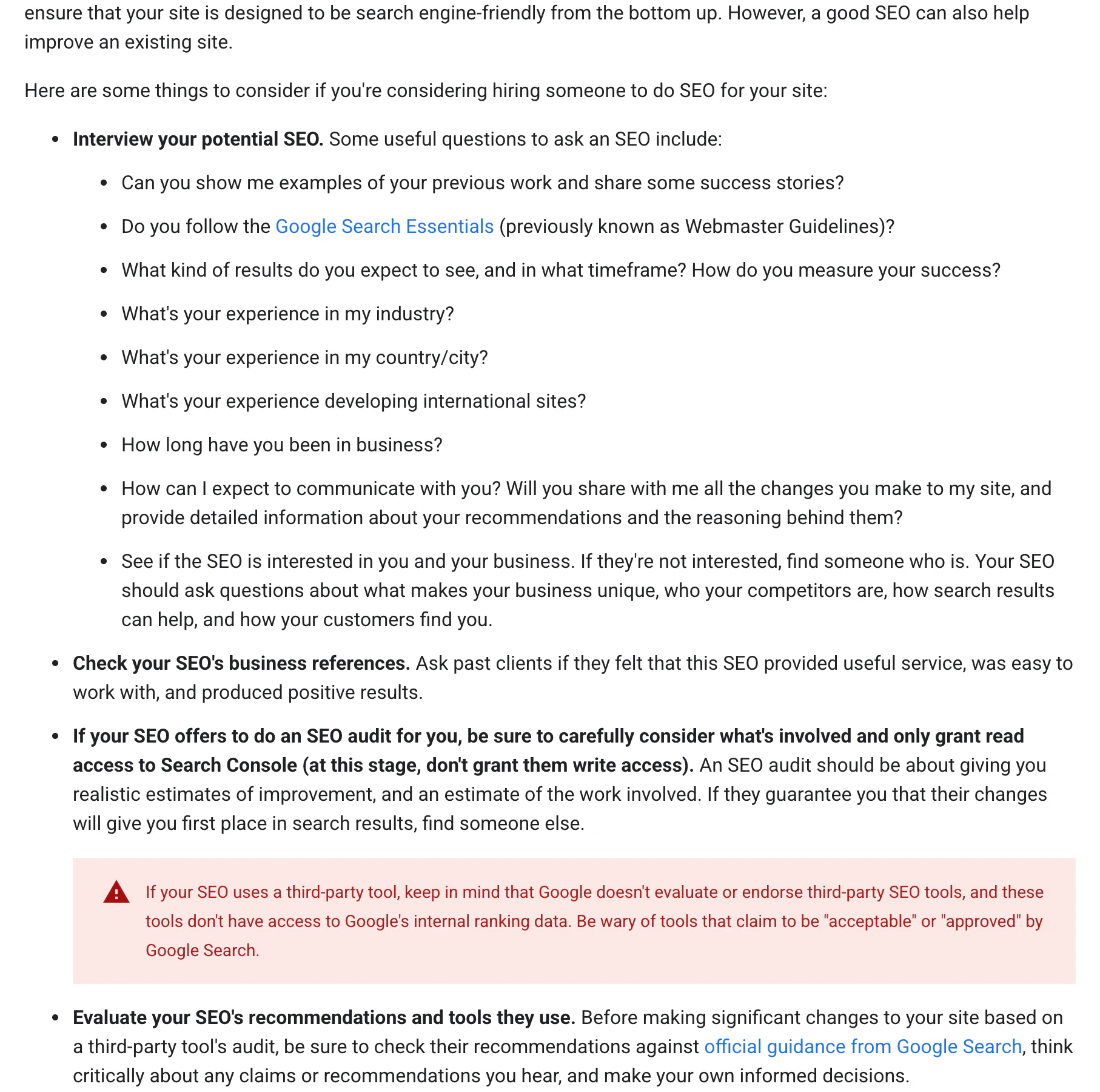
Google's list is short and practical. I'd add a few of my own, because they reveal how the work will really run:
- 1Can you show examples of previous work and share results for a business like mine?
- 2Do you follow Google Search Essentials?
- 3What results do you expect, in what timeframe, and how do you measure them?
- 4What's your experience in my industry and my city?
- 5Who exactly will work on my account, and how much of their time does it get?
- 6What will you do in the first 90 days, in order?
- 7How will you tell me what you changed on my site and why?
- 8Which accounts will you need, and will they stay in my name?
- 9What happens to the pages and content if we stop working together?
- 10How do you build links, and can you show me some you've earned?
Listen for specifics. "We'll optimize your site" is not an answer; "we'll rebuild the three service pages that get impressions but no clicks" is.
Red flags
- Guaranteed rankings or leads. Google says no one can guarantee a #1 ranking.
- A special relationship with Google or "priority submission". Neither exists.
- Secret methods they won't explain. Google warns that deceptive SEO can get a site removed from its index.
- Bulk link packages priced per hundred links, or private blog networks. Buying links for ranking breaks Google's spam policies; see local link building for what's allowed.
- Reports full of rankings for phrases nobody searches. Ask what those positions brought in.
- Long lock-in contracts with nothing specific promised in the first months.
- Owning your assets. Your domain, website, Business Profile and analytics should be in your accounts, with the provider added as a user.
- Unsolicited emails promising page one. Google specifically warns about these.
What a good proposal includes
- A short diagnosis of your site and market, specific enough that you can tell they actually looked
- The goal in business terms: calls, booked jobs, demo requests or sales
- The work for the first 90 days, in order, with deliverables you can check
- Who does the work and how you'll communicate
- How reporting works and which numbers it uses (Search Console, Analytics, Business Profile, call tracking)
- Price, term and how either side can end it
A scorecard to compare providers
SEO provider scorecard (score each 1 to 5)
Understood my business and customers: Diagnosis was specific to my site: Relevant past results I could verify: Clear first 90 days of work: Named person doing the work: Honest about timelines (no guarantees): Measures calls, leads or sales: I keep ownership of all accounts: Fair contract and exit terms: References checked: Total (out of 50):
Score every provider on the same sheet right after the call, while it's fresh. Cheapest and most confident often score lowest once you write it down. For budget expectations, see how much SEO costs, and for what the work involves, what an SEO consultant does.
After you hire
- Add the provider as a user on Search Console, Analytics, your Business Profile and the website. Don't hand over your own passwords.
- Agree on a starting snapshot: current clicks, calls, form fills and Maps actions, so later reports compare against something real.
- Expect a list of shipped work every month, not just results.
- Give it a fair window. How long SEO takes has realistic timelines by situation.
Frequently asked questions
How do I choose a good SEO company?
Ask for relevant past results, who will do the work, what ships in the first 90 days and how success is measured. Avoid anyone who guarantees rankings or won't explain their methods.
What questions should I ask an SEO company?
Start with Google's list: examples of past work, whether they follow Google Search Essentials, expected results and timeframe, industry and local experience, how long they've been in business and how they communicate changes.
Is it a red flag if an SEO company guarantees results?
Yes. Google says no one can guarantee a #1 ranking on Google. Reasonable providers give estimates and explain what they depend on.
Should I sign a long SEO contract?
Only if the first months have specific deliverables and there's a fair way to end it. A shorter initial term with clear milestones protects both sides.
Who should own my Google Business Profile and website?
You should. Add the SEO provider as a manager or user so you can remove access at any time without losing anything.
Sources
- Do you need an SEO?, Google Search Central
- Spam policies for Google web search, Google Search Central
- Google Search Essentials, Google Search Central
Written by Nouman Sabir
Nouman Sabir is an AI search and local SEO specialist with 5+ years of hands-on work across 100+ websites, from contractors and law firms to SaaS and Shopify stores. He is Top Rated on Upwork with a 100% Job Success Score and 44 client reviews. Everything here comes from client work he has done or data he pulled himself.